
Hubs
Hubs are nodes that provide connectivity for other surrounding nodes in athe neighborhood.NYC Mesh network.
The definition of "what is a hub" is very loose, as with our mesh architecture, almost any node in the network can be a hub.
Hubs are generally created organically, where a node gets installed, and then has other nodes connected to it over time. They comevary in threesize differentfrom sizes:small small,hubs medium,serving a few neighboring buildings to large hubs and large.supernodes Thesethat categoriesprovide areconnections notfor strict,entire and you will find many variants in the field. You can modify your hub to suit your needs and the needs of other mesh members in your areaboroughs.
Omni Hub
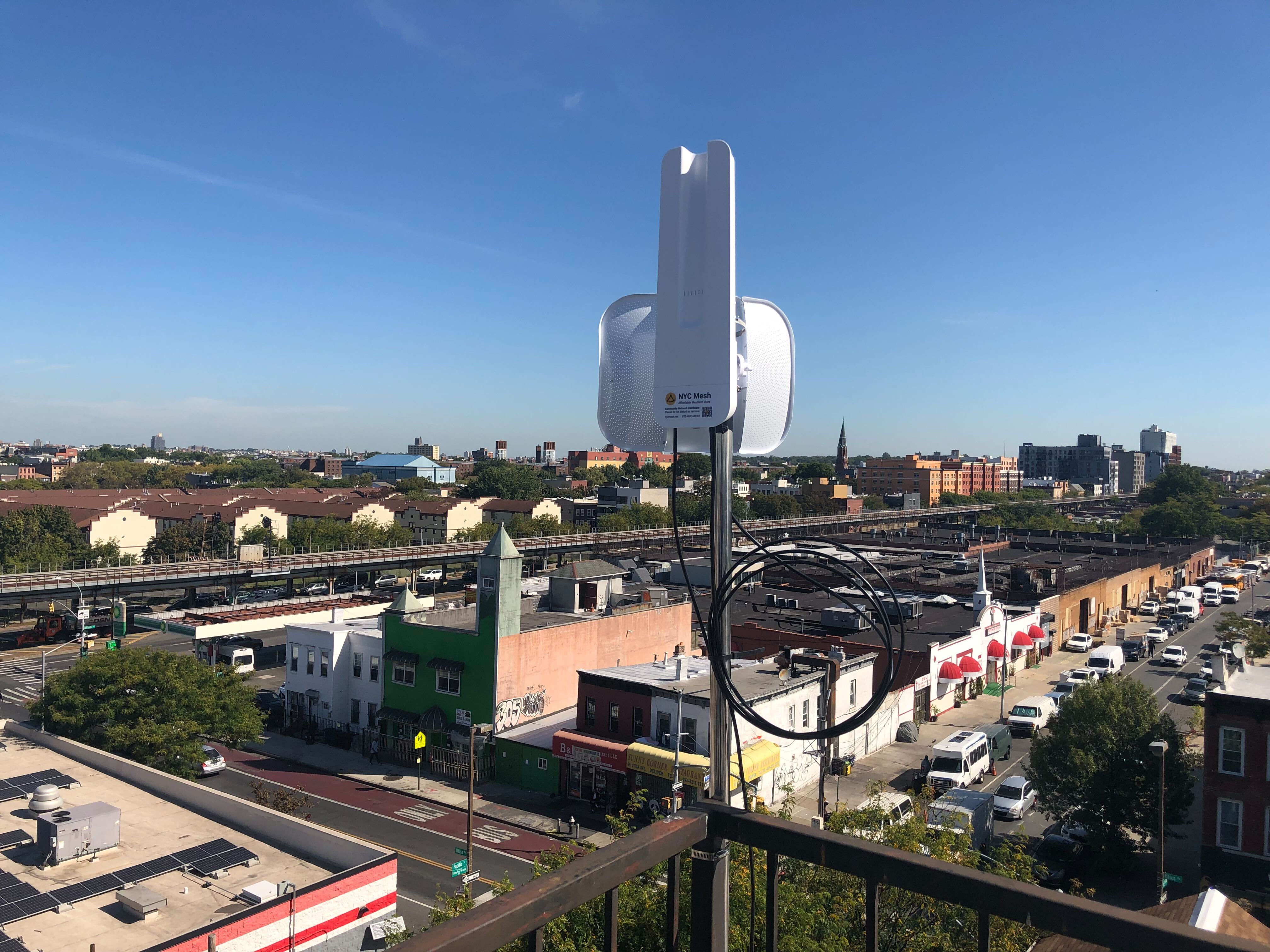
(Pictured: A typical Omnitik plus Litebeam install on a rooftop somewhere in the city)
The smallest possible hub is any NYC Mesh node with an OmniTik 5 POE ac on the roof.
With a LiteBeam AC connected to a sector antenna at another hub or supernode to give it a reliable uplink connection, the OmniTik can then serve nearby nodes that have OmniTiks, SXTs or other compatible equipment using a 5GHz wireless connection.
With the standard OmniTik config installed on the omni, any other nearby Omni's will connect automatically with WDS.
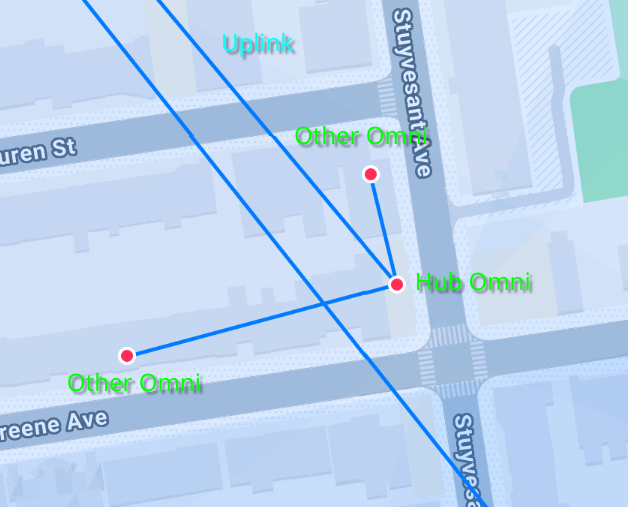
A standard Omni hub can handle up to 250mbps or so of maximum bandwidth. This is a limitation of the CPU routing capacity of the Omni. If higher bandwidth is required, routing can be offloaded to a different device like an SXT, which has a more powerful CPU.
This configuration (often called "router on a stick") is commonly used for hubs that have a higher capacity uplink antenna and are able to handle gigabit connections.
Hub with Sectors
The first upgrade for a small hub is typically adding one or more LiteAP AC sector antennas. Each LiteAP has a 120° coverage area, so three will cover a full 360° around the building. These sector antennas allow Point to Multipoint (PtMP) connections for nearby building at a further distance away than is possible with an Omni antenna.
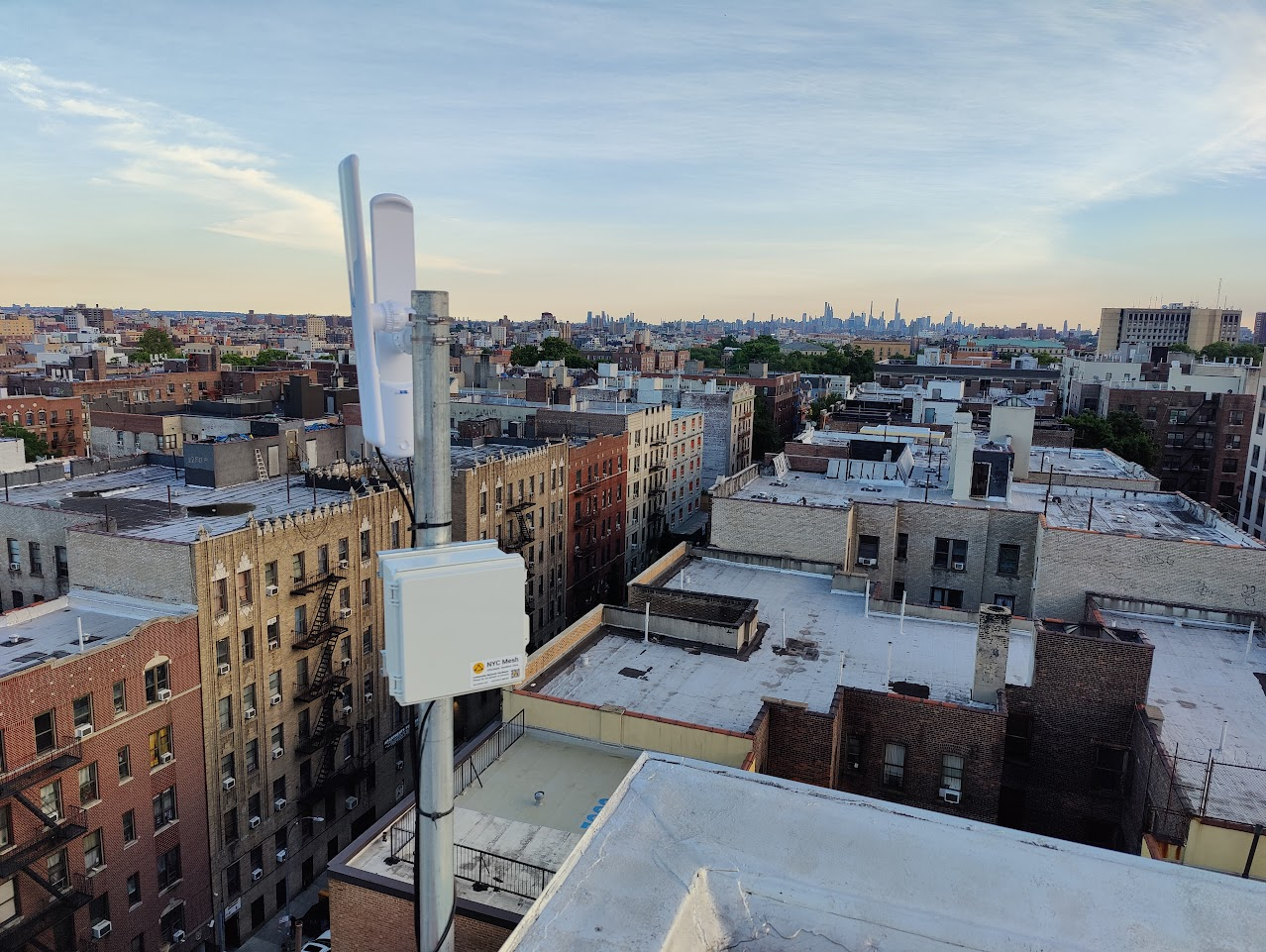
(Pictured: Lily House hub in the Bronx with sector antennas on the roof)
The number of sectors deployed depends on the expected directions from which other nodes are expect to connect. Generally we try to cover 360°, however if directions are blocked by trees / other buildings we can leave out those directions. Splitting sectors up in different locations around the roof is also common. 1 sector antenna on each corner of a square roof is a common deployment.
Many hubs with sectors are on prominent buildings that are much higher than the surrounding rooftops. These tall buildings are preferred to allow the greatest number of possible connections, however long term sustainability of the node, rooftop access and the number of members in the building are also factors that are taken into consideration when deciding candidate buildings to become a larger hub.
Large Hubs / Backbone Nodes
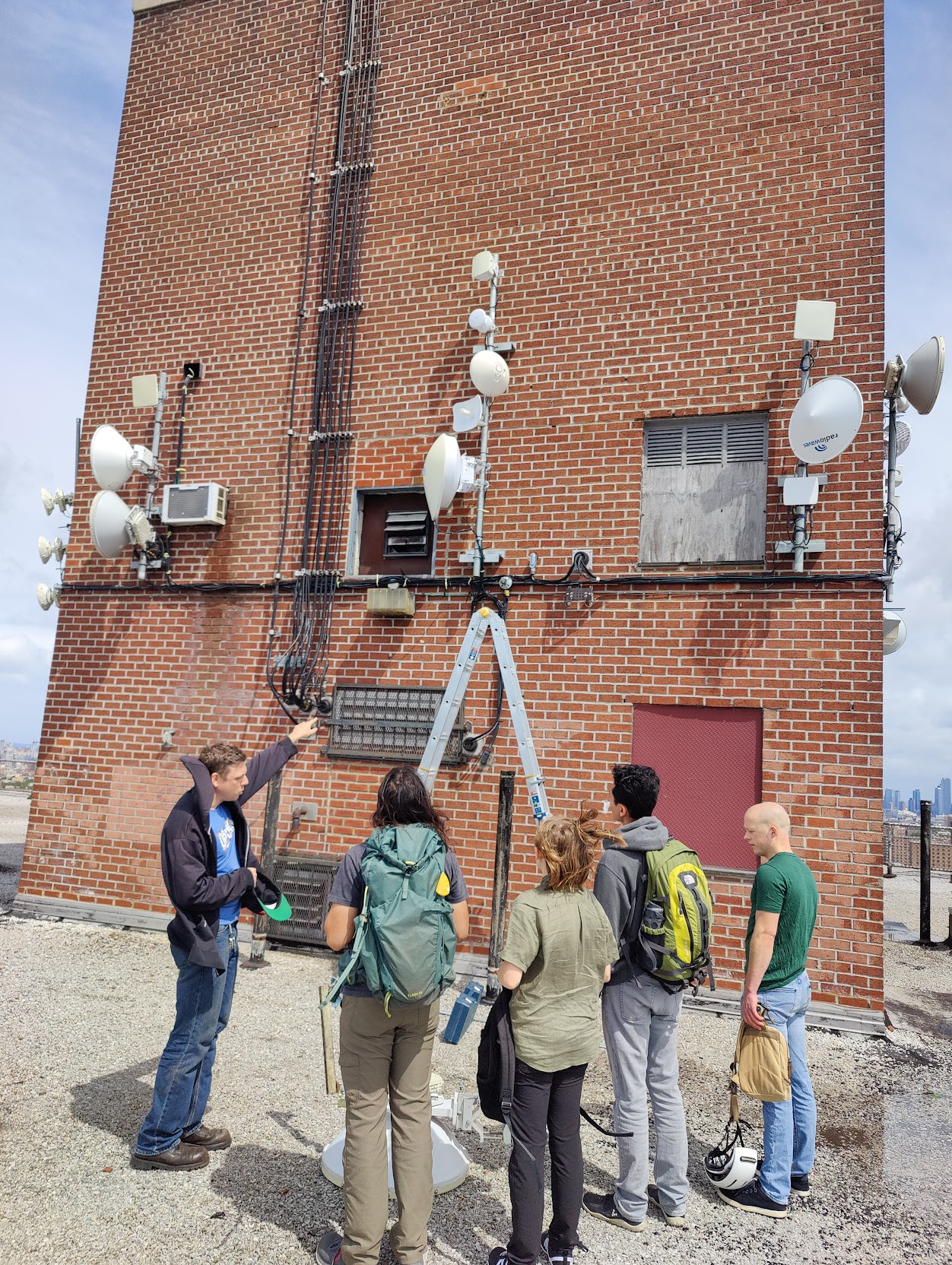
(Pictured: Many antennas on the roof of Vernon Hub in Brooklyn)
Large hubs are the backbone of the mesh network. These hubs support hundreds of members often convering a large area encompasing numerous neighborhoods.
These large hubs are outfitted with multiple high speed links to other hubs, capable of carrying 1Gbps+ of traffic. These hubs are also usually equipped with powerful routers, UPS backup batteries for power resiliency and remote monitoring capabilities. Large hubs often incorporate an indoor equipment rack that holds the core router and a EP-54V-150W power supply. Fiber optic and power cables are ran to the roof and an EdgePoint S16 or Netpower 16P is mounted on the roof to provide power to the antennas.
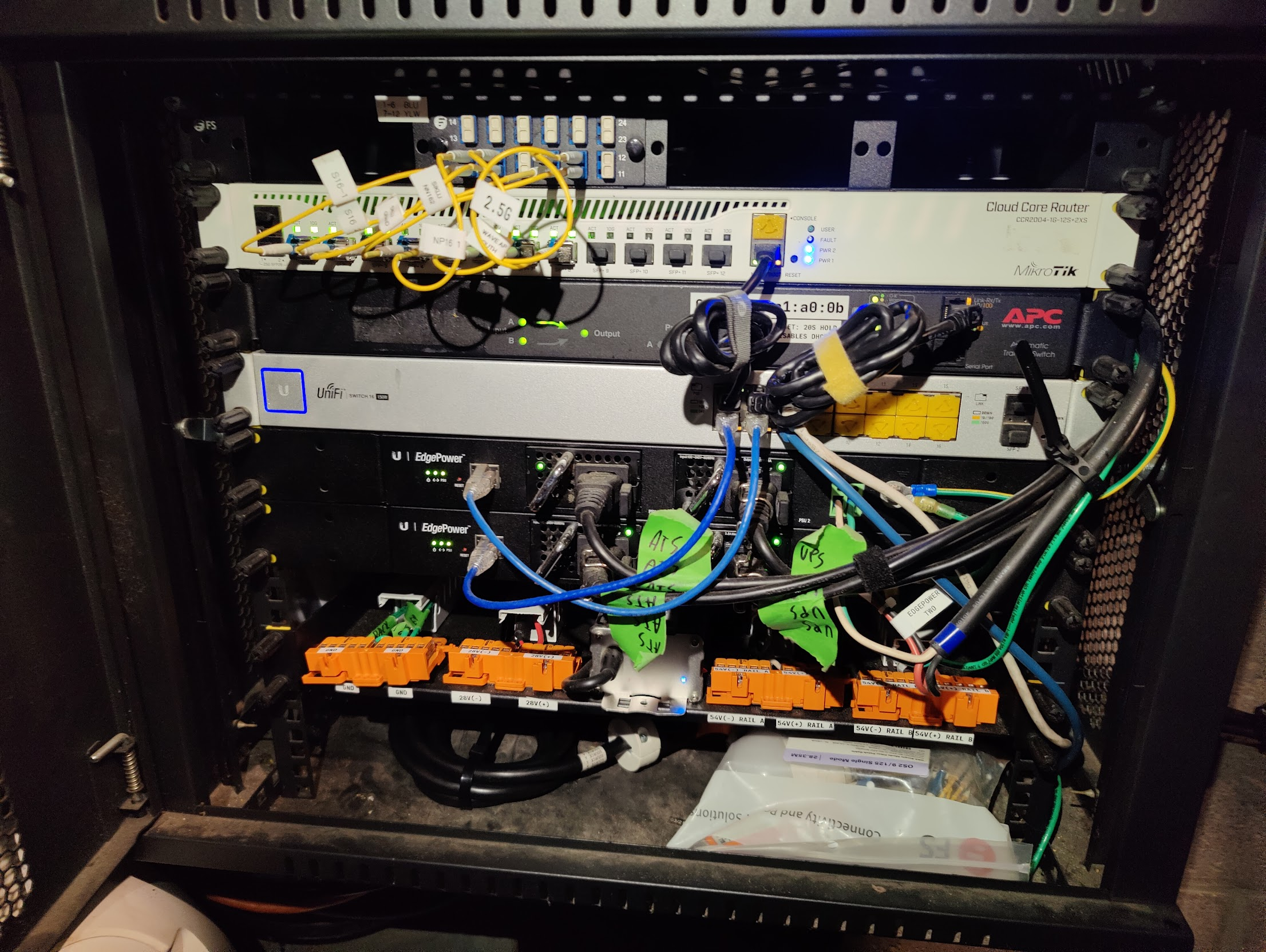
(Pictured: Equipment rack at Vernon Hub with power supplies and routers)
Fiber-attached hubs
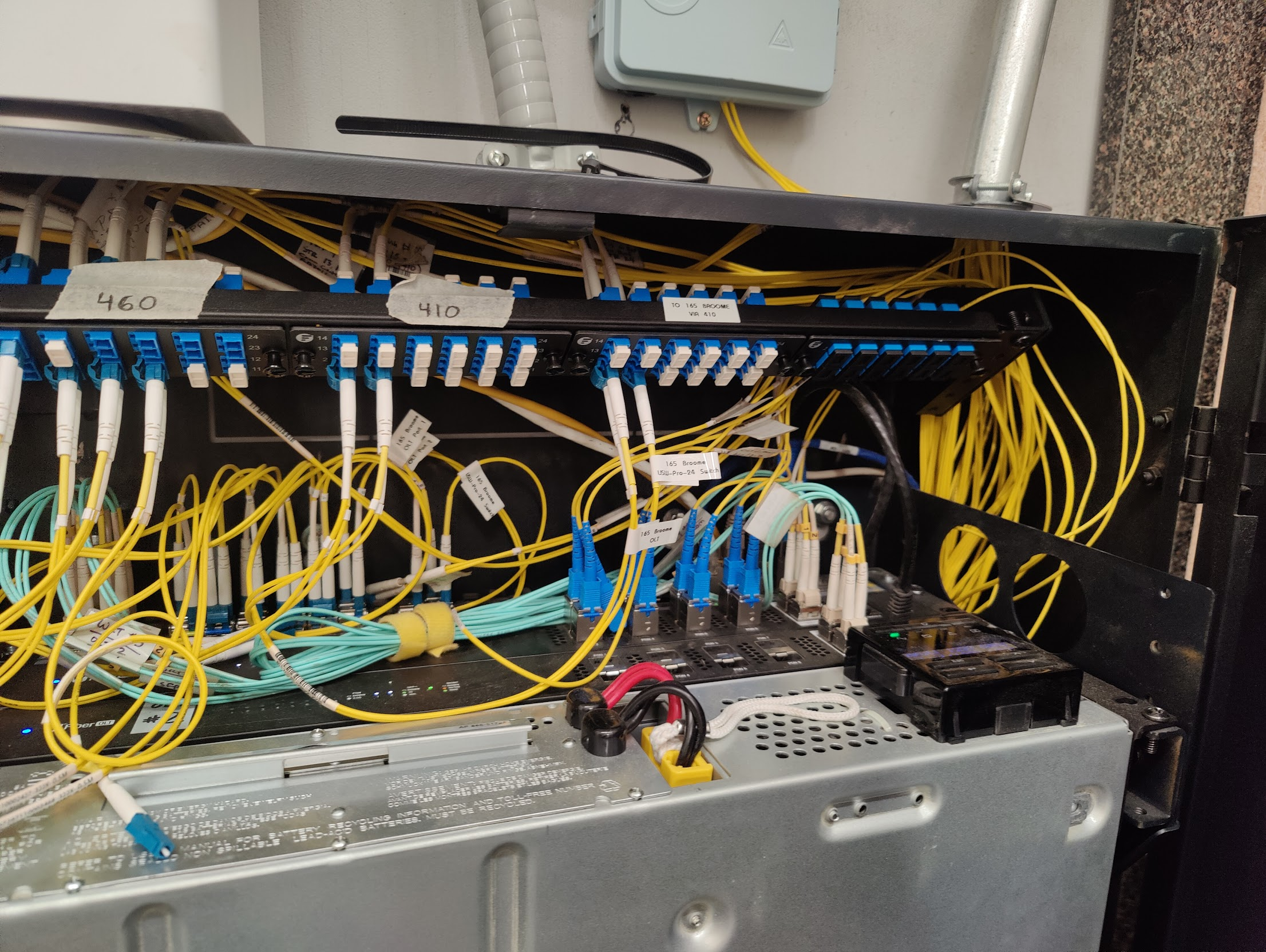
(Pictured: Fiber cables and router in Grand Street Guild in the Lower East Side)
A fiber-attached hub is a hub of any size connected by fiber to a supernode. These hubs usually have a large number of rooftop antennas, providing connections to other hubs and nearby nodes.
Most hubs in the mesh network are connected to other hubs and supernodes using a combination of point-to-point and point-to-multipoint radio links. Radio is susceptible to signal loss caused by rain, snow, and interference from other nearby radio transmitters. Hubs connected with fiber are immune to issues caused by wireless signal loss and are therefore more reliable that wireless connected hubs.
Ideally, every large or important hub in the network would be a fiber-attached hub. This would mean that everyone with line of sight to a hub would only have one wireless hop that’s subject to interference and signal loss, substantially increasing reliability. To do this, the mesh would need to lease or get donations of dark fiber that run underground between each hub and a supernode or other large / backbone node.
Supernodes
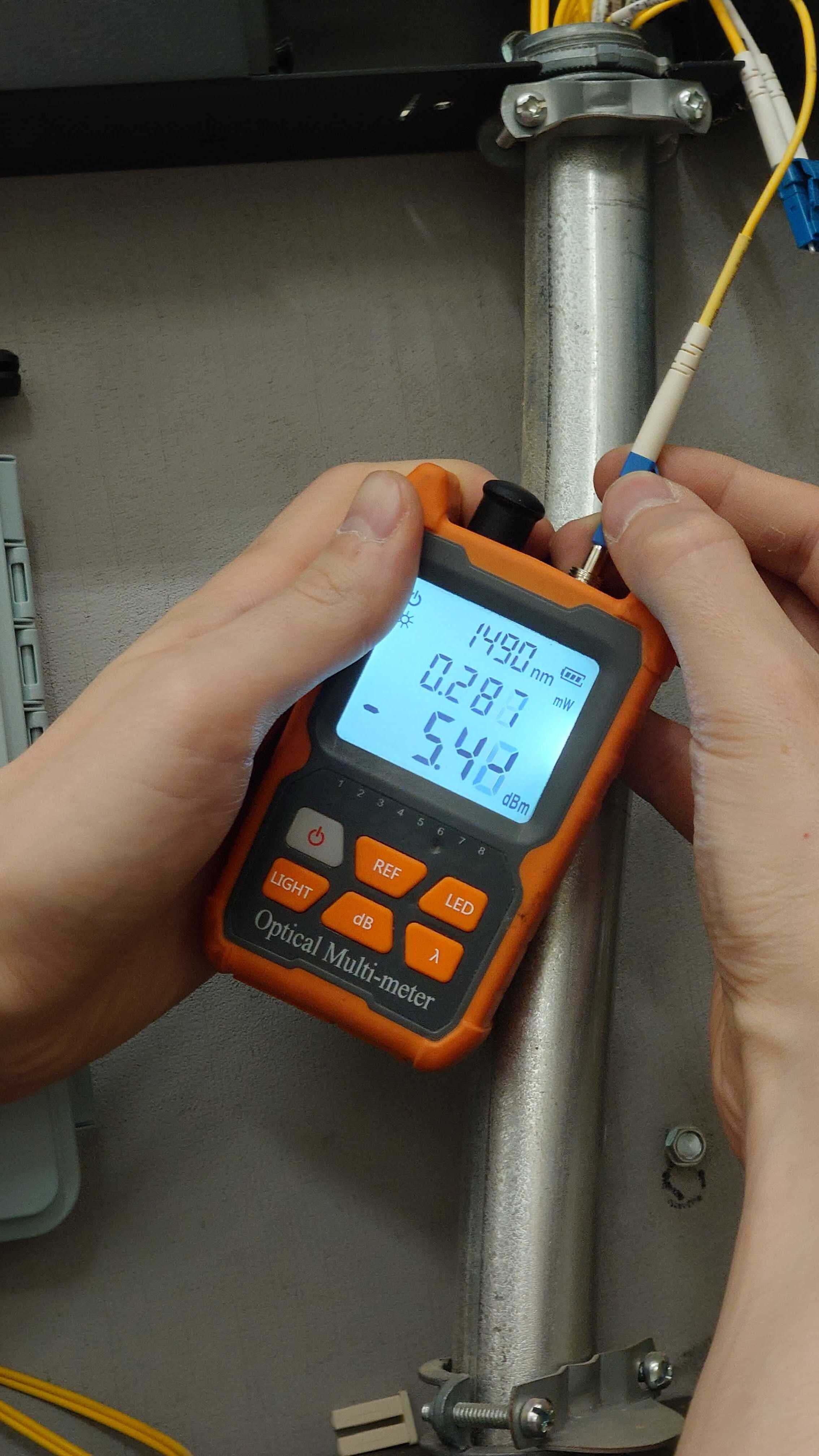
Supernodes are where NYC Mesh's network connects to the greater internet. They may or may not have antennas on the roof and may have fiber connections to other nodes on the network.
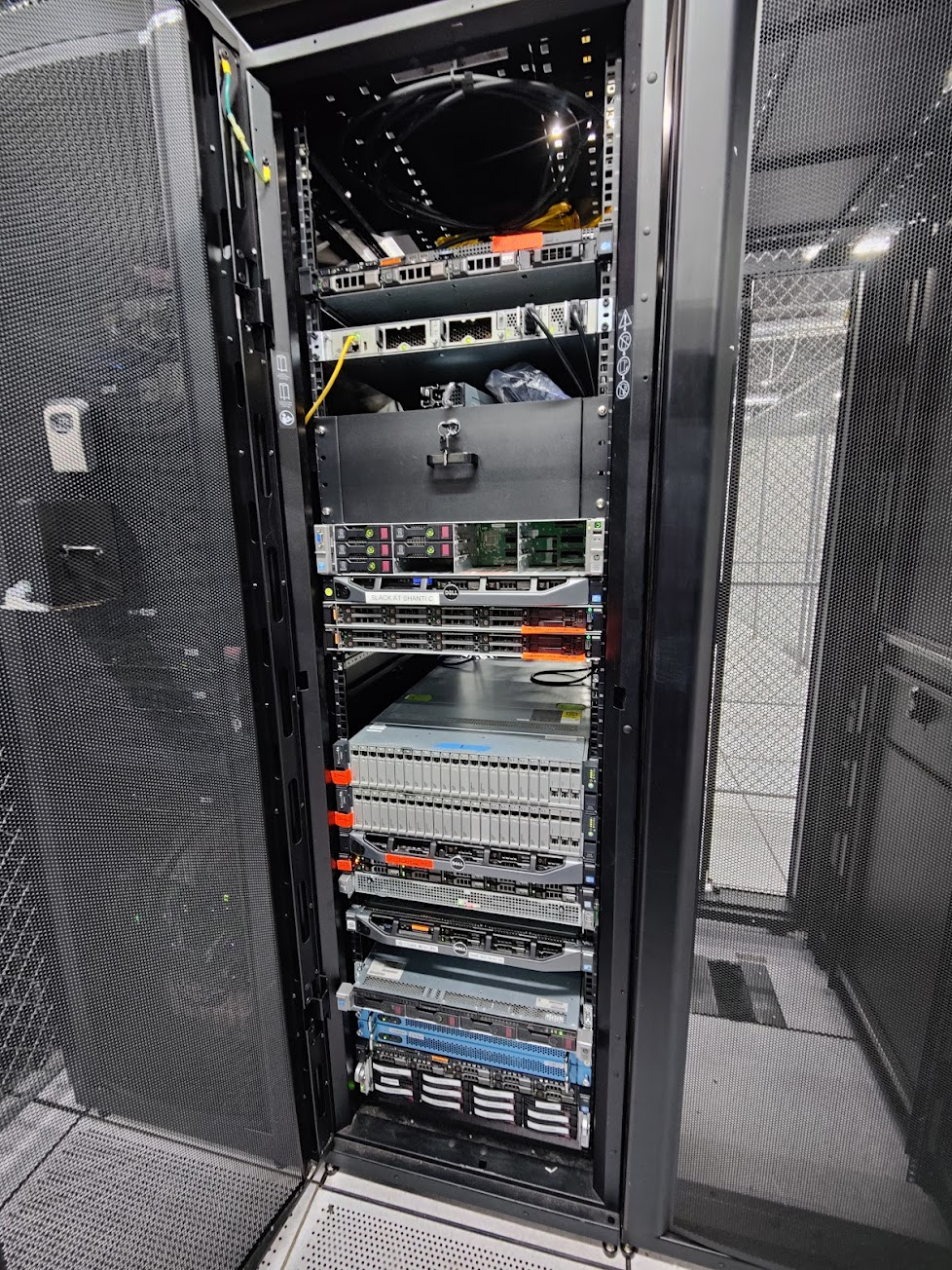
(Pictured: NYC Mesh equipment rack at Supernode 3 in Brooklyn)
Supernodes are located in data centers so that they can be connected to an internet exchange point or directly connected to other ISPs. These interconnections are mostly made with fiber. Supernodes exchange routes with ISPs on the internet using BGP. They perform NAT to translate addresses from the mesh’s private 10.0.0.0/8 network into public IP addresses, and inject a default route into the mesh OSPF routing so that nodes on the mesh know how to reach the internet.
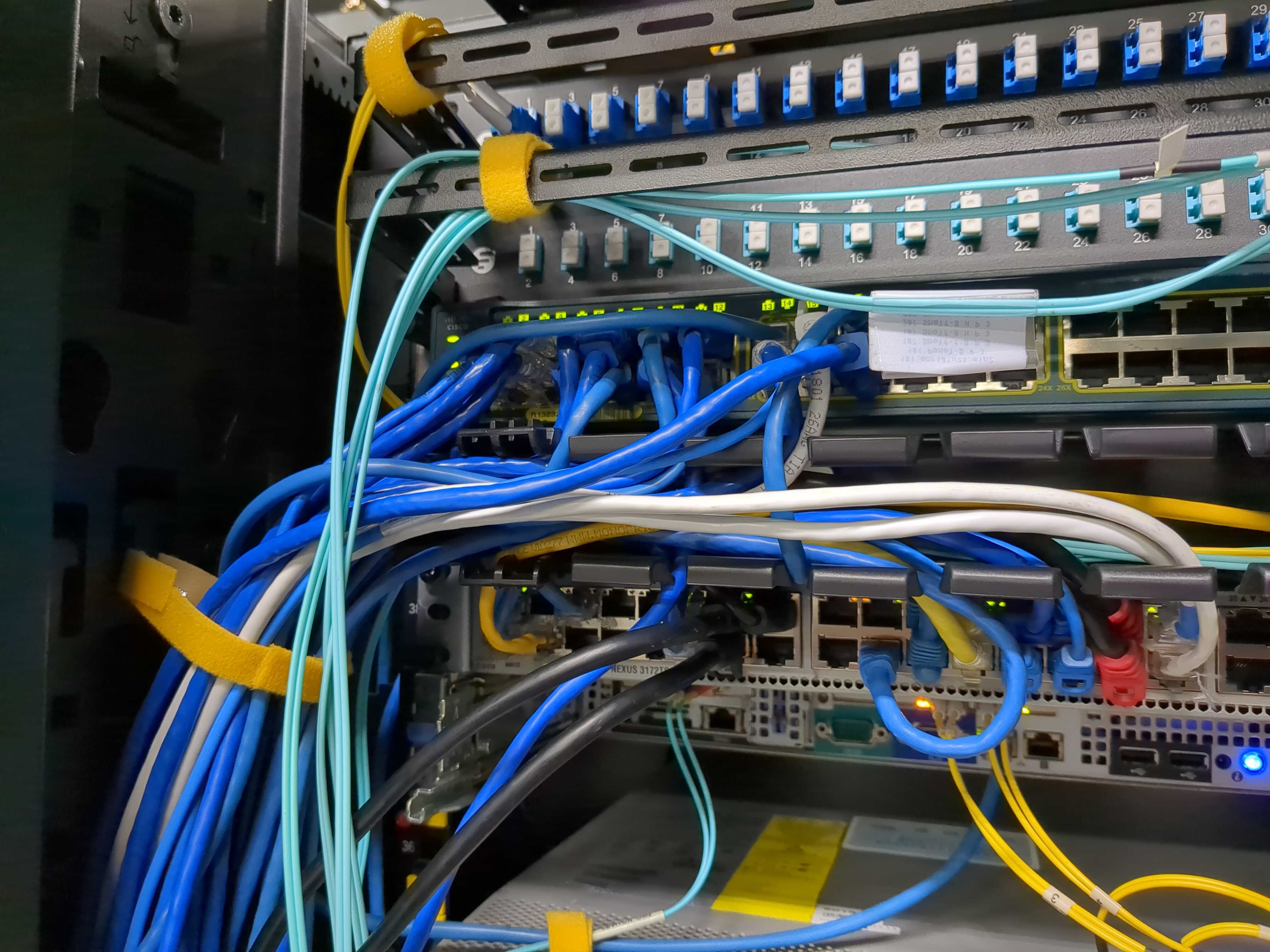
(Pictured: Fiber and Ethernet connections in a supernode rack)